

Thin red curved line on a white background, like a brushstroke or underline

Best AC Temperature for Summer in South Florida

August 28, 2026

or give us a call at

Share this article:

For most South Florida homes, 78 degrees Fahrenheit is the sweet spot while you are awake and home, balancing real comfort against the cost of running an AC through our long, humid summers. Nudging it a few degrees higher when you are asleep or away saves even more. Just as important as the number is humidity, because controlling moisture is what actually makes 78 feel comfortable here.


At Florida Cool, we are a family-owned HVAC company serving Boca Raton and the surrounding Palm Beach and Broward County communities. We keep South Florida homes cool and efficient through the hardest months of the year, so this guide reflects what works in our specific climate, not generic national advice.


In This Guide


The Best AC Temperature for a Florida Summer

The widely recommended summer setting is 78 degrees while you are home and awake. That figure comes from energy efficiency guidance as the point where most people stay comfortable without the system working harder and costing more than it needs to. It is a starting point, not a rule, and the right number for you sits within a comfortable range around it.


Finding Your Comfortable Range

Most households land somewhere between 74 and 78 degrees when home. If 78 feels warm to you at first, try lowering it a degree at a time rather than jumping straight to a much colder setting, and pair it with ceiling fans and humidity control. Small adjustments let you find the warmest setting that still feels good, which is exactly where comfort and cost meet. Give each new setting a day or two before deciding, since your body adjusts to a temperature more than you would expect, and a setting that felt warm at first often feels normal within a couple of days.


Why the Exact Number Is Personal

Comfort depends on more than the thermostat, including your home's insulation, sun exposure, humidity, and what you are used to. A well-sealed, shaded home feels comfortable at a higher setting than a sunny, drafty one. The goal is not to hit a specific number but to find the highest setting your household is happy with.


Why Lower Isn't Always Better

A common instinct on a brutally hot day is to crank the thermostat way down to cool the house faster. It does not work that way. Your AC cools at the same steady rate whether you set it to 72 or 60, so setting it very low does not speed anything up, it just makes the system run much longer to reach an extreme target.


That has real downsides. Running the system harder and longer drives up your energy bill significantly, adds wear that shortens the system's life, and in some cases can even freeze the evaporator coil when the unit runs nonstop. Setting a reasonable temperature and letting the system reach it steadily is both more comfortable and easier on your equipment than chasing a very low number.


Temperature Settings by Situation

The best setting is not one number all day, it changes with whether you are home, away, or asleep. Adjusting for those windows is where most of the savings come from, and a programmable or smart thermostat makes it effortless.

Situation Suggested Setting Why
Home and awake Around 78 degrees Comfortable balance of cost and cooling
Sleeping 78 to 80 degrees Bodies tolerate warmer temps at night; fans help
Away for the day 80 to 82 degrees Cuts runtime without letting the home overheat
Away for vacation Around 82 to 85 degrees Protects against heat and humidity, never off

One key point for Florida: never turn the AC off entirely when you leave, even on vacation. In our humidity, a home with the cooling off can climb into dangerous moisture levels that invite mold and warp wood. Set it higher, but keep it running.


Why Humidity Matters as Much as Temperature

Here on the coast, how humid your home is matters as much as the number on the thermostat. Humid air feels warmer than dry air at the same temperature, which is why 78 degrees can feel sticky and uncomfortable if the moisture is not under control, and crisp and pleasant if it is.


A properly sized, well-maintained AC removes humidity as it cools, and keeping indoor relative humidity roughly in the 40 to 50 percent range is what makes a moderate temperature feel genuinely comfortable. This is also why setting the thermostat fan to auto rather than on helps, since a fan running constantly can re-evaporate moisture off the coil back into your home. If your house feels clammy even at a reasonable setting, the issue is usually humidity, not temperature, and it is worth looking at your system's sizing, maintenance, or indoor air quality options.


Every Degree Affects Your Energy Bill

There is a real reason the thermostat number matters so much here: cooling is one of the largest parts of a South Florida electric bill, and every degree adds up. As a rule of thumb, raising the thermostat a few degrees when you do not need the extra cooling can trim a meaningful slice off your cooling costs over a summer, and the effect is larger the longer the setback lasts.


The math favors the hours you are asleep or away. Letting the home drift a few degrees warmer for the eight hours you are at work, and again overnight, cuts a large chunk of runtime without touching your daytime comfort. This is exactly what a programmable or smart thermostat is for, since it makes those setbacks automatic instead of something you have to remember. The savings are a range, not a fixed figure, because they depend on your rates, your home, and how far and how long you set back, but the direction is always the same: a higher summer setting costs less to hold.


Common Thermostat Mistakes to Avoid

A few habits quietly work against comfort and cost. Steering clear of them is often easier than any upgrade.


  • Cranking it way down to cool faster, which does not speed cooling at all and only runs the system longer for no benefit.
  • Turning the AC fully off when you leave, which lets heat and humidity build to levels that risk mold and force a hard recovery later.
  • Leaving the fan set to on, which can blow moisture off the coil back into the house and make rooms feel clammy; auto is usually better.
  • Ignoring the filter and maintenance, since a struggling system cannot hold your setting efficiently no matter the number.
  • Fighting the thermostat all day, nudging it up and down instead of picking a steady, sensible setting and letting the system work.


Avoiding these keeps your system doing its job at the lowest reasonable cost, which matters over a long Florida cooling season.


Staying Comfortable Without Cranking the AC

You can feel cooler at a higher thermostat setting with a few simple habits, which keeps both your comfort and your bill in check through the summer.


  • Run ceiling fans, since moving air makes a room feel several degrees cooler, letting you raise the thermostat without noticing.
  • Close blinds during peak sun, especially on south and west windows, to block the heat that makes the AC work hardest.
  • Use a programmable or smart thermostat to raise the temperature automatically when you are asleep or away.
  • Keep up with maintenance, because a clean, well-charged system cools and dehumidifies far more effectively.
  • Seal leaks around doors, windows, and ducts so the cool air you pay for stays inside.


Regular professional maintenance underpins all of it, since a system that is dirty, low on refrigerant, or poorly maintained cannot hold a comfortable temperature efficiently no matter where you set the thermostat. Our maintenance tune-ups keep the system running at its best through summer.


What About the Cooler Months?

South Florida barely has a winter, but the few cool snaps we do get raise a fair question about the other side of the thermostat. On the handful of chilly days each year, a heating setting around 68 to 70 degrees while you are home is a comfortable, efficient target, and lowering it a few degrees overnight or when you are out saves energy the same way a summer setback does.


The bigger point for most of the year is that our cooling season is long and our heating season is short, so summer settings are where the real savings live. Even in the mild months, humidity control keeps mattering, and a system that is maintained and set sensibly handles the occasional cool day without any fuss. If you use a smart thermostat, its seasonal scheduling will handle the switch for you.


Comfortable and Efficient All Summer With Florida Cool

The best temperature is the highest one your household is comfortable with, supported by good humidity control and a well-maintained system. If your home will not hold a comfortable setting or your bills are climbing, we can help you find out why.


Call Florida Cool at (561) 264-5286 or contact us to schedule service. We provide maintenance, AC repair, and installation across Boca Raton, Palm Beach, and Broward County.


Got Questions?

Frequently Asked Questions

  • What temperature should I set my AC in the summer in Florida?

    Around 78 degrees while you are home and awake is the recommended balance of comfort and cost, with a few degrees warmer when you are asleep or away. The ideal number is personal and depends on your home and humidity, so treat 78 as a starting point and adjust to the warmest setting your household finds comfortable.

  • Does setting my AC lower cool the house faster?

    No. Your AC cools at the same rate regardless of how low you set the thermostat, so setting it to 65 does not cool any faster than 74, it just makes the system run longer to reach an extreme target. That raises your bill, adds wear, and can even freeze the coil. Set a reasonable temperature and let it get there steadily.

  • Should I turn my AC off when I leave for the day?

    Not off, just up. Turning the AC off entirely in Florida lets heat and humidity build to levels that can encourage mold and damage your home, and the system then has to work hard to recover when you return. Raising the setting to around 80 to 82 while you are out saves energy without those risks.

  • What should I set my AC to on vacation?

    Keep it running at roughly 82 to 85 degrees rather than turning it off. That setting limits energy use while still controlling the humidity that, left unchecked, can cause mold and moisture damage in our climate. A smart thermostat lets you monitor and adjust it remotely while you are away.

  • Why does my house feel humid even when the AC is on?

    Usually it means the system is not removing enough moisture, which can come from an oversized unit that cools too fast to dehumidify, a dirty or poorly maintained system, or the fan being set to on instead of auto. Since humid air feels warmer, this makes a reasonable temperature feel uncomfortable. A maintenance visit can pinpoint and correct the cause.

Recent Posts

Florida Cool Blog

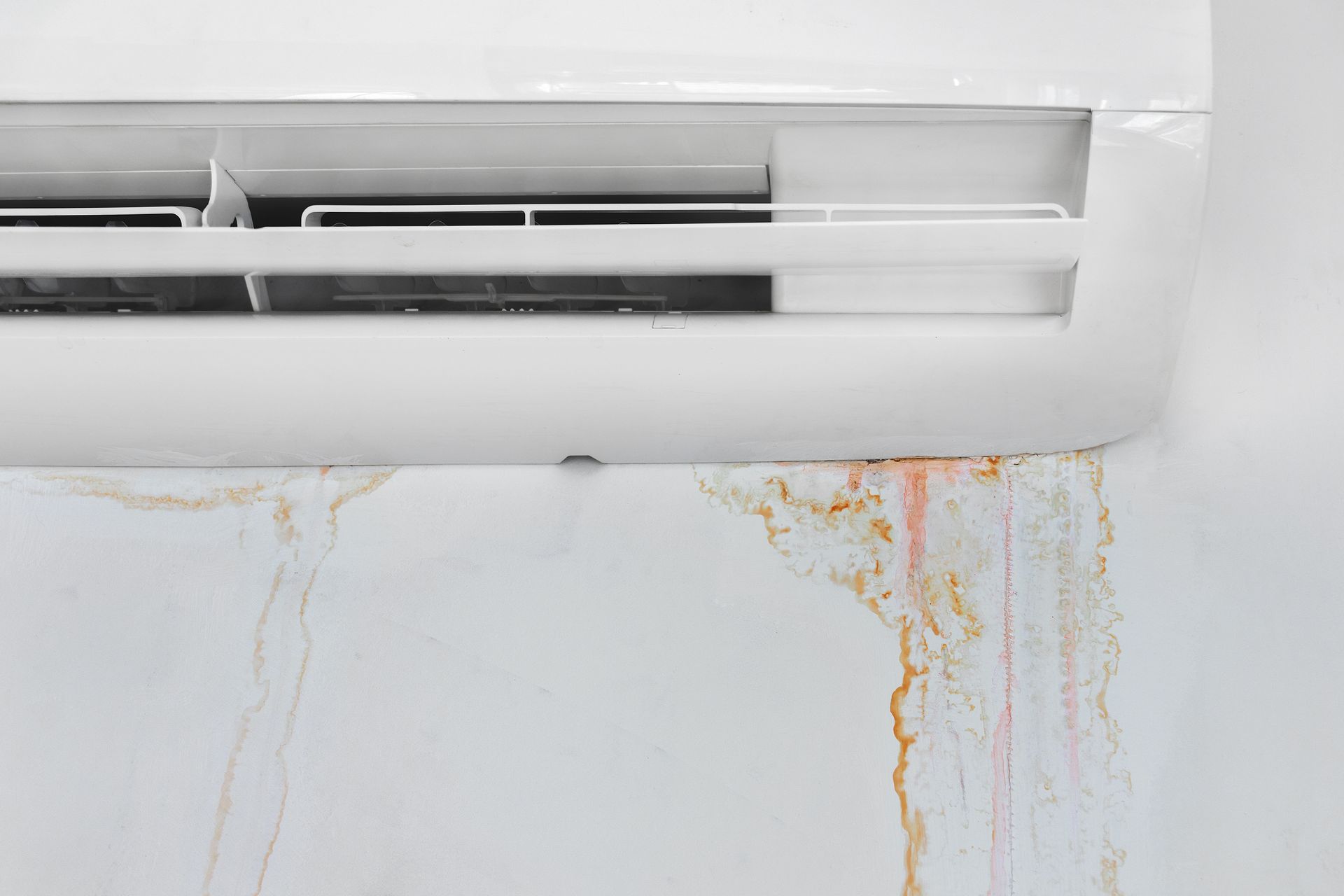
White wall with stained and peeling paint beneath a ceiling air vent unit
August 28, 2026
Why is your air conditioner leaking water? A Boca Raton HVAC team details 8 likely causes, what to do right now, and how to prevent leaks in humid Florida.
Technician carrying a black toolbox beside outdoor HVAC units on gravel.
July 25, 2026
A clogged AC drain line causes leaks, musty smells, and shutdowns. Learn the warning signs, causes, and safe next steps to clear it in humid South Florida.
Technician cleaning a wall-mounted air conditioner filter indoors
July 25, 2026
Is your AC running but not cooling? The 9 most common causes, from dirty filters to low refrigerant, plus what to do about each in the hot Florida climate.

Woman using a laptop while seated in a gray armchair, with a large blue circular background.
April 24, 2025
Trying to service or understand your HVAC system on your own can be hard, which is why the experts at Florida Cool receive a lot of questions.
Woman smiling at a wall-mounted smart thermostat while holding a smartphone in a bright room
April 24, 2025
Smart thermostats are a revolutionary addition to modern homes, offering enhanced control and energy efficiency for heating and cooling systems. Unlike traditional thermostats, these devices connect to the internet, allowing users to remotely manage their HVAC systems through smartphones, tablets, or computers.