

Thin red curved line on a white background, like a brushstroke or underline

What Size Air Conditioner Do I Need? A Florida Homeowner's Guide

September 25, 2026

or give us a call at

Share this article:

Quick answer: In South Florida, most homes need roughly one ton of cooling per 450 to 600 square feet, which puts a typical 1,500 square foot Boca Raton house at about 3 tons and a 2,400 square foot house at about 4 to 5 tons. That is a sanity check, not an answer. The real number comes from a Manual J load calculation, because ceiling height, window orientation, insulation, duct condition, and our humidity load change the result by a half ton or more in either direction.


Florida Cool is a licensed and insured HVAC contractor in Boca Raton serving Palm Beach and Broward counties, License #CAC1824283. We run load calculations on every replacement quote, and the most common mistake we correct is a homeowner asking for the same tonnage that is already sitting on the pad.


Tons, BTUs, and what the numbers mean

AC capacity is measured in BTU per hour, and one ton equals 12,000 BTU. Residential systems come in half-ton steps, which is why you see 2, 2.5, 3, 3.5, 4, and 5 tons and nothing in between.


The term has nothing to do with weight. It comes from the cooling effect of melting a ton of ice over 24 hours, which is a piece of trivia worth knowing only because it explains why the units sound so odd.


Two systems of the same tonnage can still perform very differently. A single-stage 3-ton unit delivers 3 tons or nothing, while a variable-speed 3-ton unit modulates down and runs longer at partial load, which is what actually removes moisture from a Florida house.


Florida sizing versus national rules of thumb

Most sizing articles you will find use one of two shortcuts: 20 BTU per square foot, or 600 to 1,000 square feet per ton. Watch where those pages come from. Several of the highest-ranking results are written for Ontario or the northern United States, where 750 to 1,000 square feet per ton is reasonable. Applying that here would leave a Delray Beach house badly undersized.


Our practical range is tighter and higher: roughly 450 to 600 square feet per ton, or about 20 to 25 BTU per square foot. Three things drive the difference.


  • Cooling season length. Our systems log thousands of runtime hours a year, so design day performance matters much more than it does where the AC runs four months.
  • Latent load. In South Florida, a big share of the work is pulling water out of the air rather than lowering the temperature. That moisture removal is real capacity being consumed, and it does not show up in a square-footage shortcut.
  • Construction type. Concrete block with minimal wall insulation, single-pane windows on older homes, and ducts running through a 130-degree attic all push the load up.

Sizing chart for South Florida homes

Use this to check whether a quote is in the right neighborhood, then insist on the calculation.

Home size Typical South Florida tonnage What pushes it to the higher end
900 to 1,200 sq ft 2 to 2.5 tons West-facing glass, vaulted ceilings, attic ductwork
1,200 to 1,600 sq ft 2.5 to 3 tons Single-pane windows, block walls, open floor plan
1,600 to 2,000 sq ft 3 to 3.5 tons Two stories, large sliders, poor attic insulation
2,000 to 2,500 sq ft 3.5 to 4 tons Sun exposure on two elevations, high occupancy
2,500 to 3,000 sq ft 4 to 5 tons Anything above 5 tons usually means two systems or zoning

Most single-family homes top out at 5 tons per system. Beyond that, the right answer is generally two systems or a zoned design rather than one oversized unit, which also gives you redundancy when one side needs service.


One budget note tied to size: because federal efficiency minimums step up at 45,000 BTU, which is 3.75 tons, 4-ton and 5-ton systems start from a higher efficiency floor and therefore a higher price. We break that down in our guide to new AC costs in Florida.


Why oversizing is the bigger risk here

Undersizing is uncomfortable. Oversizing is uncomfortable and expensive, and in our climate it causes the problem most homeowners blame on something else.


What short cycling does to your comfort

An oversized system satisfies the thermostat fast, then shuts off. Short cycles do not give the evaporator coil enough time to condense moisture out of the air, so the house hits 74 degrees while sitting at 60 percent relative humidity. It feels clammy, windows sweat, and mold finds the cool damp surfaces. People respond by dropping the thermostat, which raises the bill without fixing the humidity.


Longer, steadier run times are what dry a Florida house out. That is the whole reason a properly sized system, or better still a variable-speed one, feels more comfortable at 76 degrees than an oversized single-stage unit feels at 73.


What it does to the equipment

Compressor starts are the hardest thing a system does. A unit that starts twice as often as it should does not reach the back end of its expected life, and in a market where systems already run shorter lives than the national average, that matters.


Oversized equipment also costs more upfront and pulls a bigger electrical load for no comfort gain. If your AC cools but the air never feels dry, sizing is a prime suspect, along with the causes in our post on an AC that runs but does not cool.


Signs your current system is the wrong size

You can often tell before anyone runs a calculation, because undersizing and oversizing fail in opposite directions.


It is probably undersized if

  • It runs almost continuously on hot afternoons and still cannot reach the thermostat setting
  • The house cools fine in the morning and loses ground after about 2 p.m.
  • Rooms farthest from the air handler stay several degrees warmer all day
  • The system finally catches up only after sunset


It is probably oversized if

  • Cycles are short, often under 10 minutes, and frequent
  • The air feels cold and damp rather than cold and dry
  • Indoor humidity stays above roughly 55 percent even though the temperature is fine
  • You see condensation on windows, registers, or toilet tanks
  • The house cools quickly and then feels stuffy until the next cycle


Two clarifications. A system can be correctly sized and still behave like this if the ducts are leaking badly or the filter is choked, so check the simple causes first. And a single hot room is usually a duct or insulation problem rather than a tonnage problem, which is worth knowing before anyone sells you a bigger condenser.


How to find out what size you have now

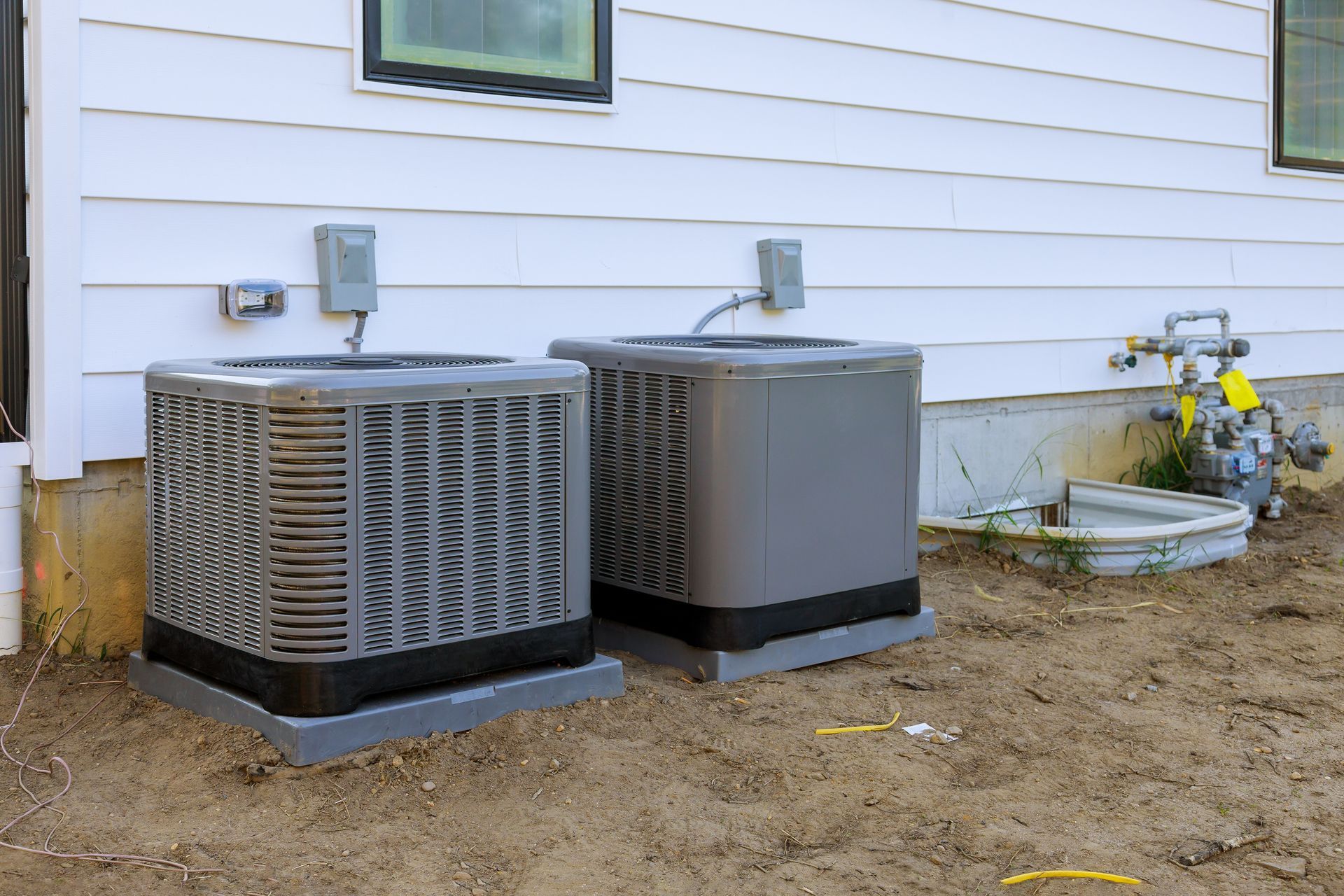
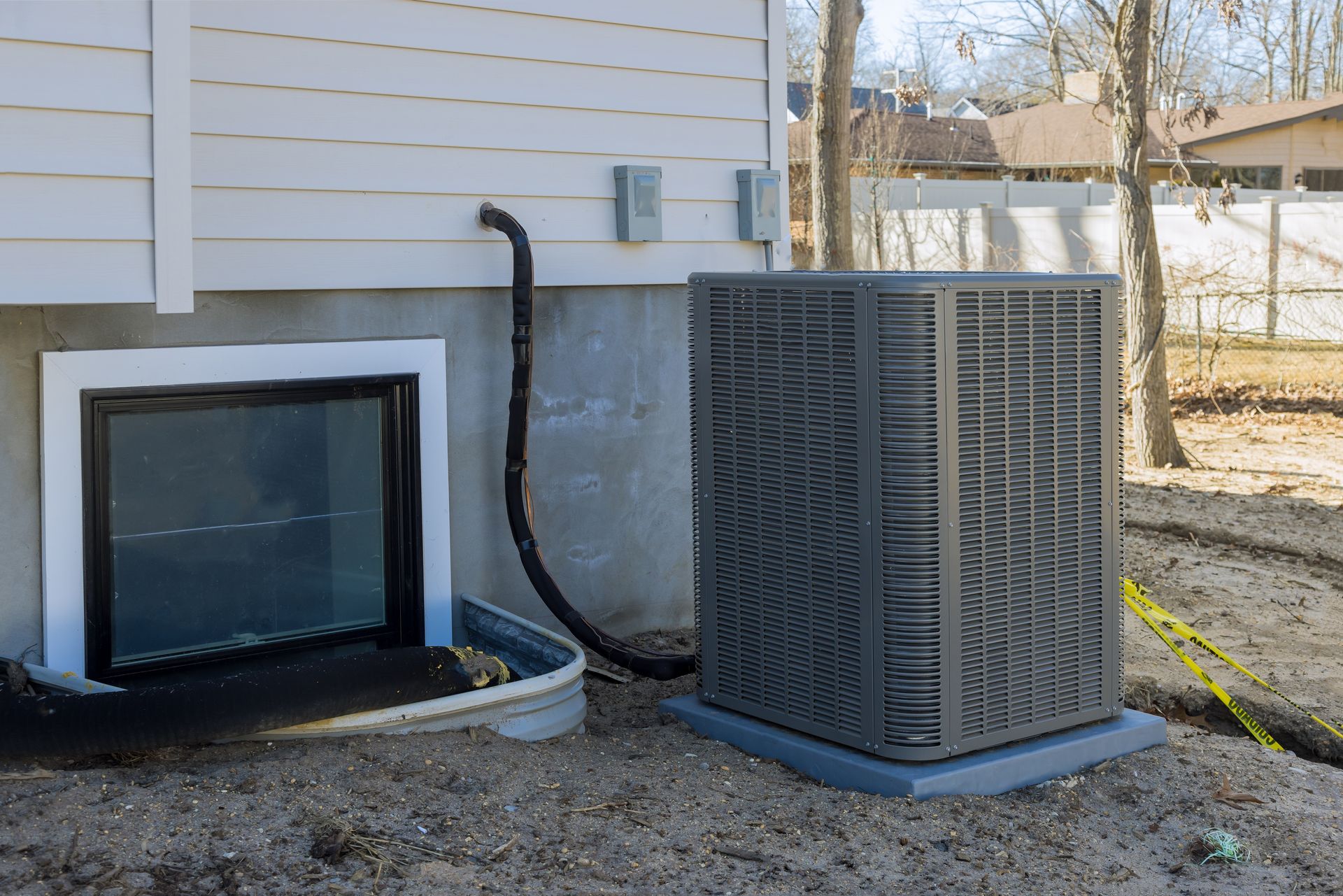
You do not need a technician for this. Go to the outdoor condenser and find the metal data plate, usually on the side of the cabinet.


Look at the model number for a three-digit group that is a multiple of six: 018, 024, 030, 036, 042, 048, or 060. Most manufacturers encode nominal capacity in BTU hundreds there, so 024 means 24,000 BTU, which is 2 tons. 036 is 3 tons, 048 is 4 tons, and 060 is 5 tons.


A few cautions from the field. The indoor air handler can be a different size than the condenser, which is a mismatch worth knowing about. The number tells you nominal capacity, not what the system is actually delivering after 12 years of coil fouling and duct leakage. And most importantly, it tells you what somebody installed, not what your house needs. We regularly find homes running a 5-ton system that calculates to 4, usually because a previous contractor matched the tonnage of an even older unit that was oversized to begin with.


What actually changes the calculation

A Manual J calculation is required documentation for a permitted changeout, and it looks at the whole house rather than the floor area. The inputs that move the number most in this market:


  • Window area and orientation. West and south glass is a large heat gain. A Boca Raton home with a wall of sliders facing the afternoon sun can calculate a half ton higher than an identical floor plan facing north.
  • Ceiling height and volume. A vaulted great room holds far more air than the square footage implies.
  • Insulation and roof color. Attic insulation depth and radiant barrier presence change the ceiling gain substantially.
  • Duct location and leakage. Ducts in an unconditioned attic lose capacity before the air reaches the room. Sealing them can reduce the tonnage you need.
  • Occupancy and appliances. People and kitchens add load, which matters in a full house versus a seasonal one.
  • Shade and exposure. Mature trees, neighboring buildings, and screened patios all count.
  • Air infiltration. Older jalousie windows and unsealed penetrations leak humid outdoor air continuously, which is latent load your system pays for.


The output is a number in BTU, which then gets matched to the nearest available equipment size, with the choice usually leaning down rather than up for humidity control.


Your ducts may cap the size

This is the step skipped most often, and it decides whether a correctly sized system performs correctly.


Air conditioners need roughly 350 to 400 CFM of airflow per ton. In humid climates, installers often target the lower end of that range on purpose, because slower air across a colder coil removes more moisture. Either way, your existing duct system has a fixed capacity.


If your returns and supply trunk were sized for a 3-ton system, dropping in a 4-ton unit does not give you 4 tons of cooling. It gives you a starved system, high static pressure, a coil that ices, and a blower working itself to death. Undersized returns are extremely common in older South Florida homes, and the symptom is a system that cools poorly at both ends of the house.


A proper quote includes a look at the return sizing and duct design, not just the equipment. When ducts are the bottleneck, duct sealing or replacement is usually a better investment than a bigger condenser.


Get a load calculation

We will measure the house, count and orient the glass, check insulation and duct condition, and give you a calculated tonnage with the reasoning behind it. If it comes back smaller than what you have now, we will show you why.


Call Florida Cool at (561) 286-3844 or book an appointment. We handle AC installation across Boca Raton, Delray Beach, West Palm Beach, Pompano Beach, Fort Lauderdale, and nearby communities, and we also cover commercial HVAC.


Got Questions?

AC sizing FAQs

  • What size AC unit do I need for a 1,500 square foot house in Florida?

    Usually 3 tons, sometimes 2.5 if the home is well insulated and shaded, and 3.5 if it has vaulted ceilings, extensive west-facing glass, or leaky attic ducts. Square footage alone gets you to the right neighborhood, not the right unit.

  • Is it better to oversize or undersize an air conditioner?

    Neither, and in South Florida oversizing causes more complaints. An oversized unit short-cycles, leaves humidity in the house, and wears out sooner. When a calculation lands between two sizes, the humidity argument usually favors the smaller one paired with variable-speed equipment.

  • Can I just replace my AC with the same size I have now?

    Sometimes that is correct, but it should be confirmed rather than assumed. Many existing systems were oversized, and homes change: new windows, added insulation, or a sealed attic all reduce the load. A calculation costs you nothing on a quote and can save you money on equipment.

  • How many square feet will a 3-ton AC cool in Florida?

    Roughly 1,400 to 1,800 square feet in this climate. That same 3-ton unit would cover noticeably more area in a northern state, which is why national sizing charts should not be used here.

  • Does a bigger AC cool the house faster?

    Yes, and that is the problem. Cooling faster means shorter run times and less moisture removed, so the house reaches temperature while still feeling damp. Comfort in Florida depends on humidity at least as much as temperature, which is also why thermostat strategy matters. We covered that in our guide to the best AC temperature for South Florida summers.

Recent Posts

Florida Cool Blog

White wall-mounted air conditioner with open front panel, angled near the ceiling.
September 21, 2026
New AC cost in Florida for 2026: installed ranges by tonnage, why refrigerant rules raised prices, what belongs in a quote, and how to compare bids fairly.
White wall with stained and peeling paint beneath a ceiling air vent unit
August 28, 2026
Why is your air conditioner leaking water? A Boca Raton HVAC team details 8 likely causes, what to do right now, and how to prevent leaks in humid Florida.
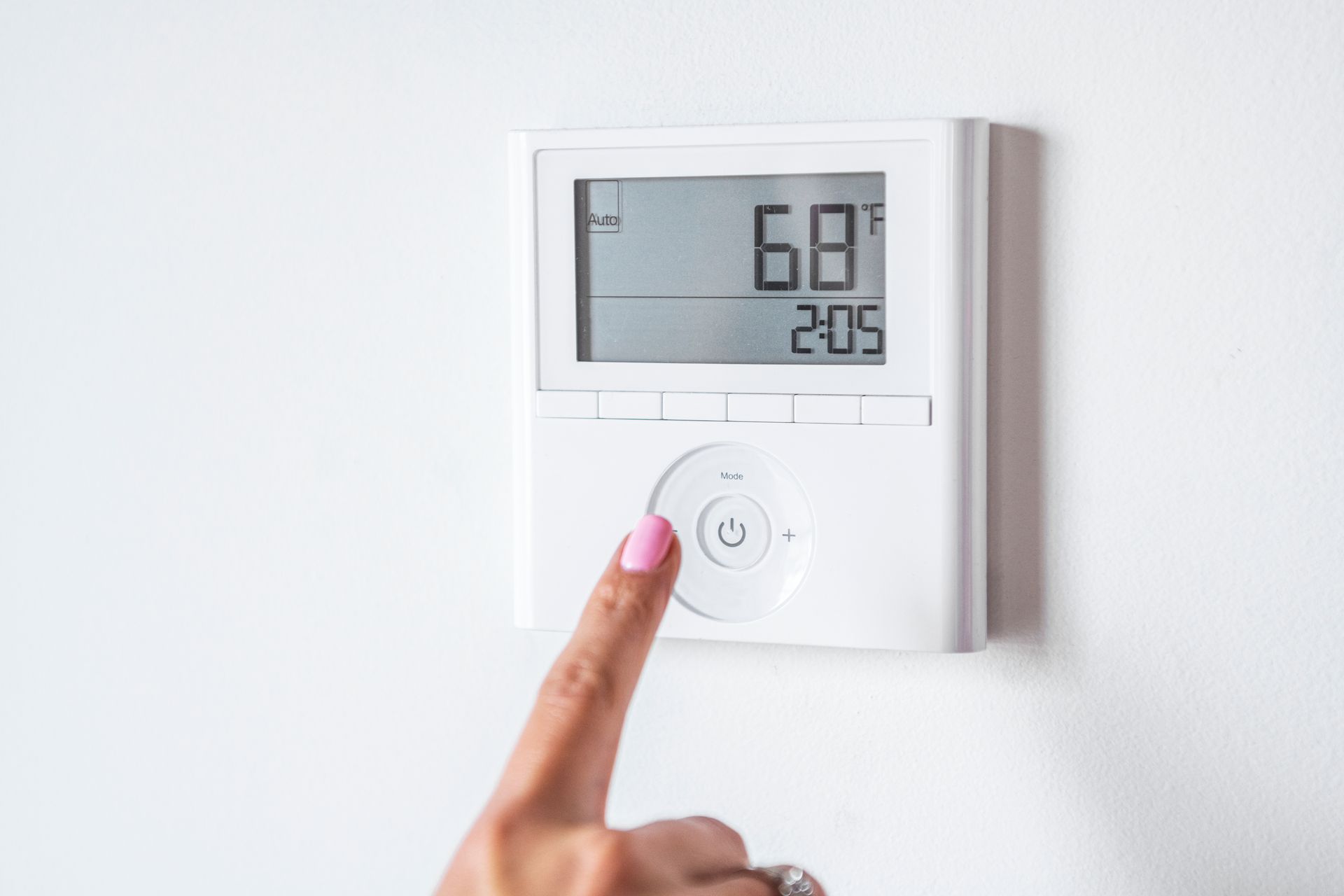
Hand turning a wall thermostat showing 68°F and 20.5°C
August 28, 2026
What is the best AC temperature for a South Florida summer? A Boca Raton HVAC team on the ideal setting, humidity, and how to stay cool without high bills.
Technician carrying a black toolbox beside outdoor HVAC units on gravel.
July 25, 2026
A clogged AC drain line causes leaks, musty smells, and shutdowns. Learn the warning signs, causes, and safe next steps to clear it in humid South Florida.
Technician cleaning a wall-mounted air conditioner filter indoors
July 25, 2026
Is your AC running but not cooling? The 9 most common causes, from dirty filters to low refrigerant, plus what to do about each in the hot Florida climate.

Woman using a laptop while seated in a gray armchair, with a large blue circular background.
April 24, 2025
Trying to service or understand your HVAC system on your own can be hard, which is why the experts at Florida Cool receive a lot of questions.

Woman smiling at a wall-mounted smart thermostat while holding a smartphone in a bright room
April 24, 2025
Smart thermostats are a revolutionary addition to modern homes, offering enhanced control and energy efficiency for heating and cooling systems. Unlike traditional thermostats, these devices connect to the internet, allowing users to remotely manage their HVAC systems through smartphones, tablets, or computers.

