
Thin red curved line on a white background, like a brushstroke or underline

What Does AC Maintenance Include? A Complete Tune-Up Checklist

October 27, 2026

or give us a call at

Share this article:

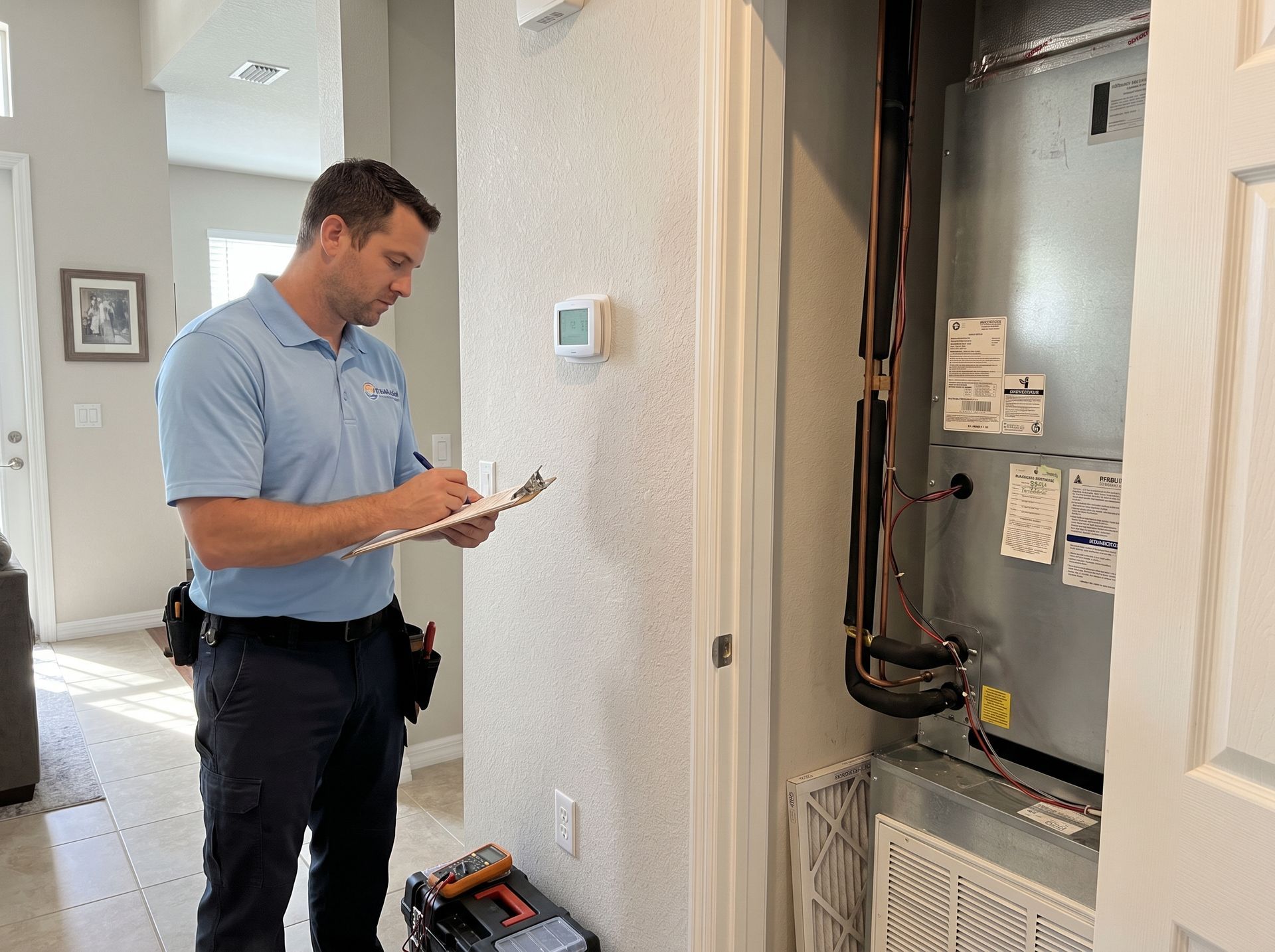
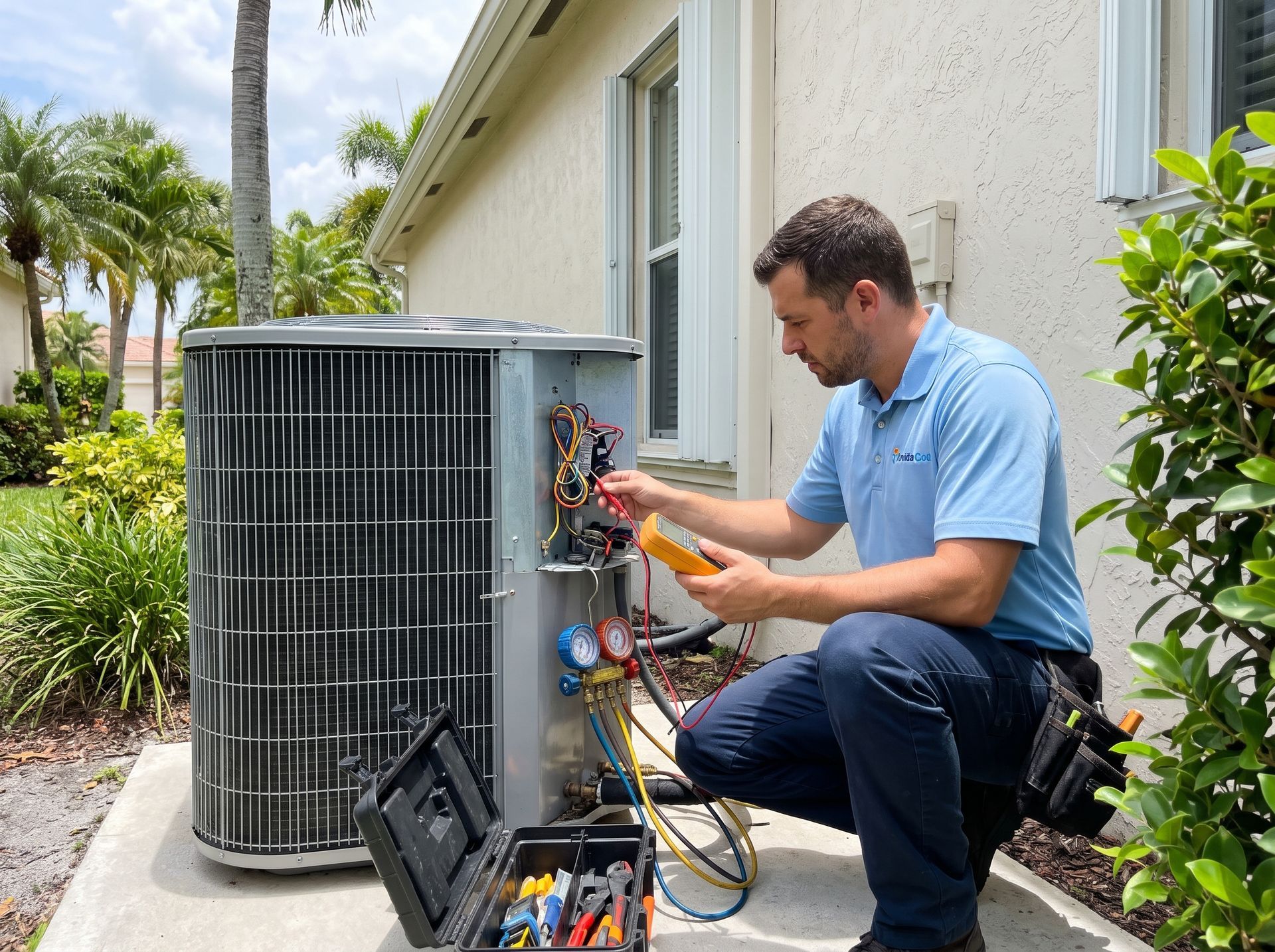
A complete AC maintenance visit includes cleaning or replacing the air filter, clearing and treating the condensate drain line and pan, inspecting and cleaning the indoor evaporator coil and outdoor condenser coil, checking refrigerant levels and pressures, testing capacitors, contactors, motors, and electrical connections, calibrating the thermostat, inspecting the blower assembly, and checking safety controls. In South Florida, where systems run nearly year-round, drain line care and coil cleaning are the items that prevent the most breakdowns, and most homes benefit from maintenance at least twice a year.


Florida Cool is a family-owned HVAC company based in Boca Raton, licensed as a Class B Certified Air Conditioning Contractor (License #CAC1824283), serving homes across Palm Beach and Broward Counties. Every qualifying maintenance visit in our plans follows a detailed multi-point inspection. This guide explains each step, why it matters in our climate, and what a tune-up does and does not cover.


In This Guide


The Tune-Up Checklist at a Glance

Here are the core tasks in a thorough residential AC maintenance visit and why each one matters in South Florida.

Maintenance Task What It Prevents Why It Matters Here
Filter change or cleaning Restricted airflow, frozen coils Systems run nearly all year
Drain line and pan cleaning Water leaks, shutdowns, mold Constant condensation feeds algae
Evaporator coil inspection and cleaning Reduced cooling and humidity control Humid air keeps indoor coils wet
Condenser coil cleaning High pressures and compressor strain Pollen, grass, and salt build up
Refrigerant pressure check Poor cooling and compressor damage Leaks often show up first in summer
Capacitor and contactor testing Sudden no-cool breakdowns Heat and lightning stress these parts
Electrical connection inspection Burned wires and failed parts Heat and humidity loosen connections
Thermostat calibration Comfort and humidity problems Small errors add up over long runtimes
Safety device checks Water damage and equipment harm Float switches protect ceilings and floors

Indoor Unit Maintenance

The indoor air handler, usually in a closet, garage, or attic, is where most moisture-related problems start.


What Gets Checked and Cleaned

  • Air filter changed or cleaned so air flows freely.
  • Condensate drain line, pan, and any pumps cleared and flushed to prevent clogs.
  • Air handler cabinet cleaned and sanitized to limit mold and odor.
  • Evaporator coil inspected and its surfaces cleaned.
  • Blower assembly and motor bearings inspected for wear and noise.
  • Belts and pulleys, where applicable, checked for wear and tension.
  • Heating elements and controls, such as heat strips, tested for the cooler months.
  • Visible ductwork inspected for disconnected sections and obvious leaks.


Why the Drain Line Gets So Much Attention

Florida systems pull a lot of moisture out of the air. That water drains through a small line that algae and sludge easily clog. A clogged drain can overflow into ceilings and floors or trip a safety switch that shuts off cooling. Clearing it during every visit is one of the most valuable parts of maintenance. Our guides to a clogged AC drain line and an air conditioner leaking water explain the warning signs.


Outdoor Unit Maintenance

The outdoor condenser releases the heat removed from your home. When it cannot do that efficiently, the whole system works harder.


What Gets Checked and Cleaned

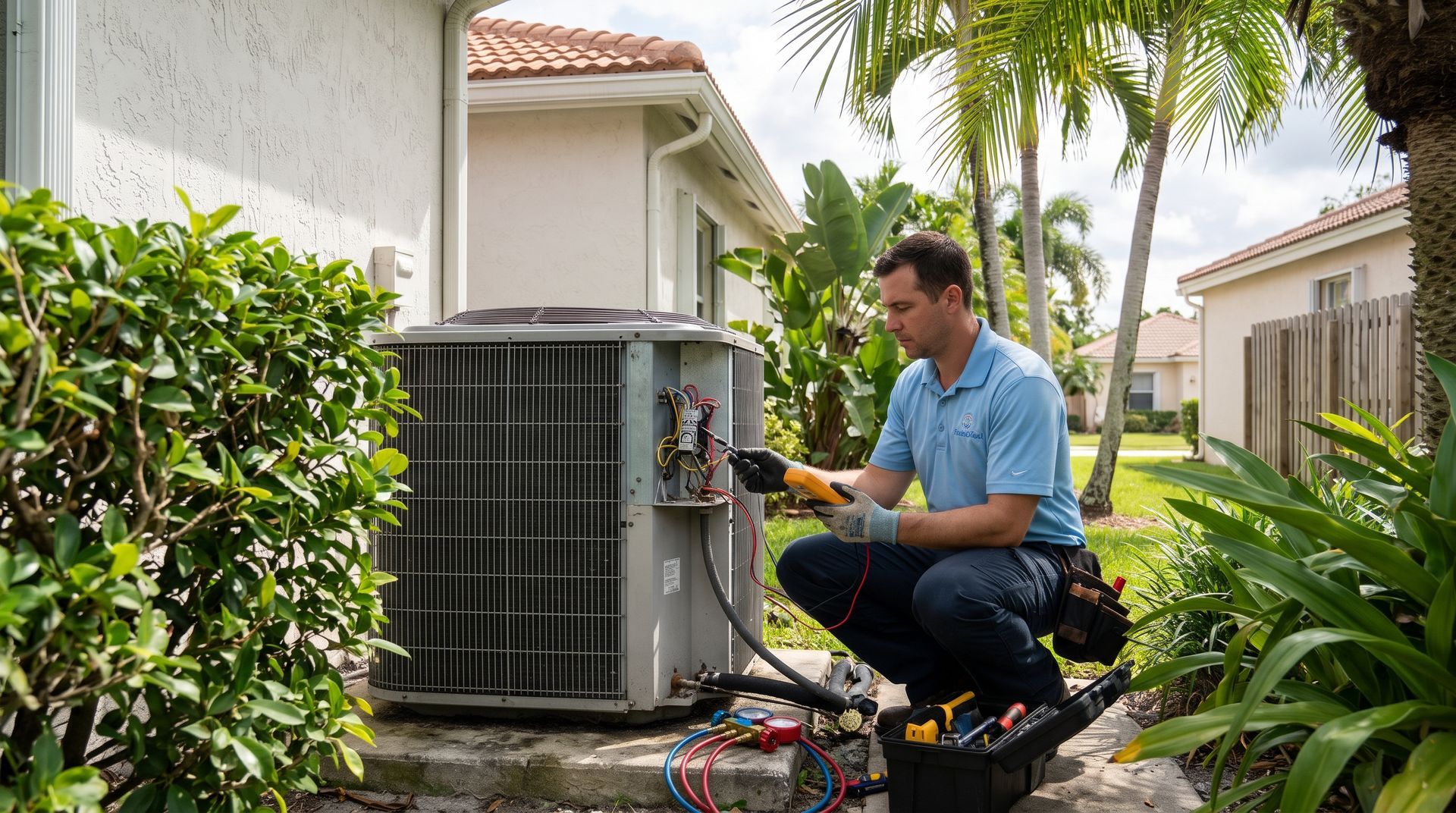
  • Condenser coil inspected and cleaned of dirt, pollen, grass clippings, and salt residue.
  • Condenser fan motor and blade tested and checked for wear.
  • Refrigerant lines and connections inspected for leaks and damaged insulation.
  • Refrigerant levels and pressures checked against manufacturer specifications.
  • Cabinet and pad inspected for damage, rust, and proper level.
  • Clearance around the unit checked so plants and debris do not block airflow.


Coastal Homes

In neighborhoods near the ocean and Intracoastal, salt air corrodes outdoor coils and electrical parts. More frequent coil cleaning and inspection for corrosion can add years to a coastal system. Our guide on how long air conditioners last in Florida explains how salt air affects lifespan.


Electrical and Control Checks

Electrical parts cause many of the sudden breakdowns homeowners experience on hot afternoons.


What Gets Tested

  • Capacitors, which help start the compressor and fan motors and commonly weaken in heat.
  • Contactors and relays, which switch the outdoor unit on and off.
  • Blower and condenser motors, tested for proper operation.
  • Electrical connections, inspected and tightened where needed.
  • Disconnects and breakers, tested for safe operation.
  • Operating controls verified so the system starts, runs, and stops correctly.
  • Safety devices, including float switches and high- and low-pressure controls, examined.
  • Thermostat tested and calibrated.


Why This Matters

A weak capacitor or worn contactor can often be caught during maintenance before it fails. Replacing it on your schedule is far better than losing cooling on a 95-degree day. If your system is running but not cooling, see our guide to an AC running but not cooling.


How Often Florida Homes Need AC Maintenance

At Least Twice a Year

In much of the country, once a year is enough. In South Florida, where systems run most of the year, we recommend at least two professional visits a year, often in spring before peak summer and again in fall.


When More Visits Make Sense

Homes near the coast, homes with pets, large homes with multiple systems, and homes with a history of drain clogs may benefit from more frequent service. Some of our plans include four visits a year for this reason.


Warranty Requirements

Many equipment manufacturers expect regular professional maintenance. Keeping service records helps protect your warranty and documents the system's condition if issues arise.


What AC Maintenance Does Not Include

A tune-up is an inspection and cleaning service, not a repair visit. It usually does not include:


Repairs and Replacement Parts

If a technician finds a weak capacitor, failing motor, or worn contactor, replacing it is typically a separate repair. Maintenance plan members often receive discounts on these repairs.


Refrigerant Recharge and Leak Repair

Checking refrigerant levels is part of maintenance. Adding refrigerant or repairing a leak is a separate service. A system that is low on refrigerant has a leak somewhere, and topping it off without addressing the leak only delays the problem.


Deep Coil Cleaning and Duct Cleaning

Heavily soiled or corroded coils may need a deeper chemical cleaning. Whole-system duct cleaning is a separate service. Learn more about our duct cleaning and sealing and indoor air quality services.


What Homeowners Can Do Between Visits

A few simple habits help your system run better between professional visits.


Check the Filter Monthly

Replace the filter when it looks dirty, often every one to three months depending on the filter type and household.


Watch the Drain

If your system has an accessible drain line clean-out, your technician can show you how to keep it clear. Watch for water around the air handler or in the drain pan.


Keep the Outdoor Unit Clear

Trim plants back, keep grass clippings and leaves away, and aim sprinklers away from the unit.


Pay Attention to Changes

New noises, warm air, rising humidity, or higher electric bills are signs to call for service rather than waiting for the next scheduled visit.


Set a Sensible Temperature

Our guide to the best AC temperature for South Florida explains settings that balance comfort, humidity control, and system wear.


Signs Your AC Needs Service Before the Next Tune-Up

Do not wait for a scheduled visit if you notice any of these:


  • Warm air from the vents, or the system runs constantly without reaching the set temperature.
  • Water around the indoor unit, in the drain pan, or stains on the ceiling below an attic air handler.
  • Ice on the refrigerant lines or indoor coil.
  • New noises, such as buzzing, clicking, grinding, or rattling.
  • Musty or burning smells from the vents.
  • Sticky, humid air even though the AC is running.
  • A sudden jump in your electric bill.


Catching these early often turns a major repair into a minor one.


Condos, Multi-System Homes, and Attic Units

Some homes need a slightly different approach.


Condos and Townhomes

In many South Florida condos, the air handler sits in an interior closet and the condenser is on the roof or a balcony. Rooftop access may require coordination with building management. Drain line care is especially important because overflow can damage units below.


Multi-System Homes

Larger homes often have two or more systems, each serving different floors or zones. Each system needs its own inspection, and problems in one zone can make another work harder. Plans that cover multiple systems simplify scheduling.


Attic Air Handlers

Air handlers in hot attics deserve close attention to drain pans, float switches, and duct connections, since a small leak or overflow can damage ceilings below before anyone notices.


What a Good Maintenance Visit Should Leave You With

A thorough tune-up should end with clear information, not just a sticker on the air handler.


A Summary of Findings

Your technician should explain what was checked, what was cleaned, and anything that is wearing out. Readings like refrigerant pressures and capacitor test results help track changes from one visit to the next.


Clear Recommendations

If a part is weak but still working, you should hear whether it needs attention now or can be monitored. No one should pressure you into repairs on the spot.


A Record for the Future

Keeping maintenance records helps with warranty claims, makes it easier to spot trends, and can be useful when you sell the home. Buyers and home inspectors in South Florida often ask how recently the AC was serviced.


Maintenance Plans and Cost

Maintenance cost depends on the size and number of systems, access, and whether extra cleaning is needed.


Florida Cool Maintenance Plans

Our residential plans currently include a two-visit plan at $225 per year, a four-visit plan at $383 per year, and a premium plan at $400 per year with added labor protection and stronger discounts. Plan members receive priority service and discounts on repairs. Current details are on our maintenance plans page.


Why Plans Pay Off

Regular maintenance helps the system run efficiently, reduces the chance of emergency breakdowns during peak summer, and can extend system life. It also makes it easier to plan replacement on your schedule. For more on our tune-up service, see maintenance and tune-ups.


Schedule Your AC Tune-Up

If your system has not been serviced in the last six months, or you have noticed changes in cooling, humidity, or noise, it is a good time for maintenance. Our technicians will complete a full inspection, explain what they find, and recommend repairs only when they are needed. Learn more about our AC repair services or read customer reviews.


Call Florida Cool at (561) 264-5286 or contact us. We serve Boca Raton and communities across Palm Beach and Broward Counties, with 24/7 emergency service.


Got Questions?

Frequently Asked Questions

  • What is included in an AC tune-up?

    A tune-up typically includes changing the filter, cleaning the drain line and pan, inspecting and cleaning the coils, checking refrigerant pressures, testing capacitors, contactors, motors, and electrical connections, calibrating the thermostat, and checking safety devices.

  • How often should AC be serviced in Florida?

    At least twice a year. South Florida systems run nearly year-round, so spring and fall visits help keep them efficient and catch problems early. Coastal homes and homes with pets may benefit from more frequent service.

  • How long does AC maintenance take?

    A standard residential maintenance visit often takes about an hour for a single system, though it can take longer for systems that need extra cleaning, have difficult access, or are part of a multi-system home.

  • Does AC maintenance include adding refrigerant?

    Maintenance includes checking refrigerant levels and pressures. Adding refrigerant and repairing leaks are usually separate services, since low refrigerant means there is a leak that should be found and fixed.

  • Is an AC maintenance plan worth it in Florida?

    For most homeowners, yes. Because Florida systems run so many hours, regular maintenance helps prevent breakdowns, protects efficiency, and can extend the life of the system. Plans also typically include priority service and repair discounts.

Recent Posts

Florida Cool Blog

HVAC technician working on outdoor air conditioner beside a house in a landscaped yard
October 9, 2026
How long do air conditioners last in Florida? A Boca Raton HVAC team explains typical lifespan, what wears systems out, warning signs, and when to replace.
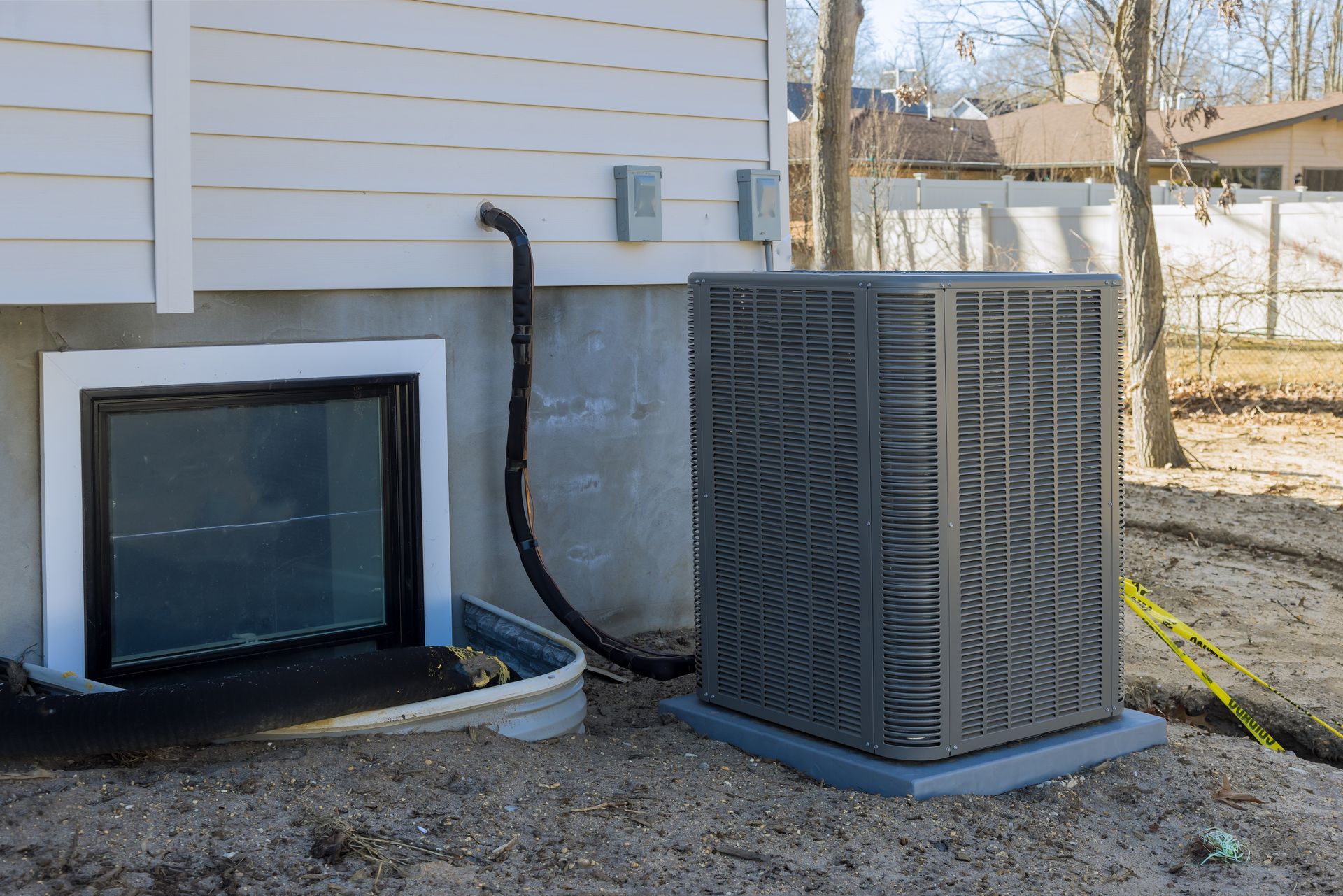
Outdoor home HVAC unit beside a basement window on a house exterior
September 25, 2026
Florida AC sizing explained: tons per square foot in South Florida, why oversizing causes humidity, how to read your current unit, and the Manual J inputs.
White wall-mounted air conditioner with open front panel, angled near the ceiling.
September 21, 2026
New AC cost in Florida for 2026: installed ranges by tonnage, why refrigerant rules raised prices, what belongs in a quote, and how to compare bids fairly.
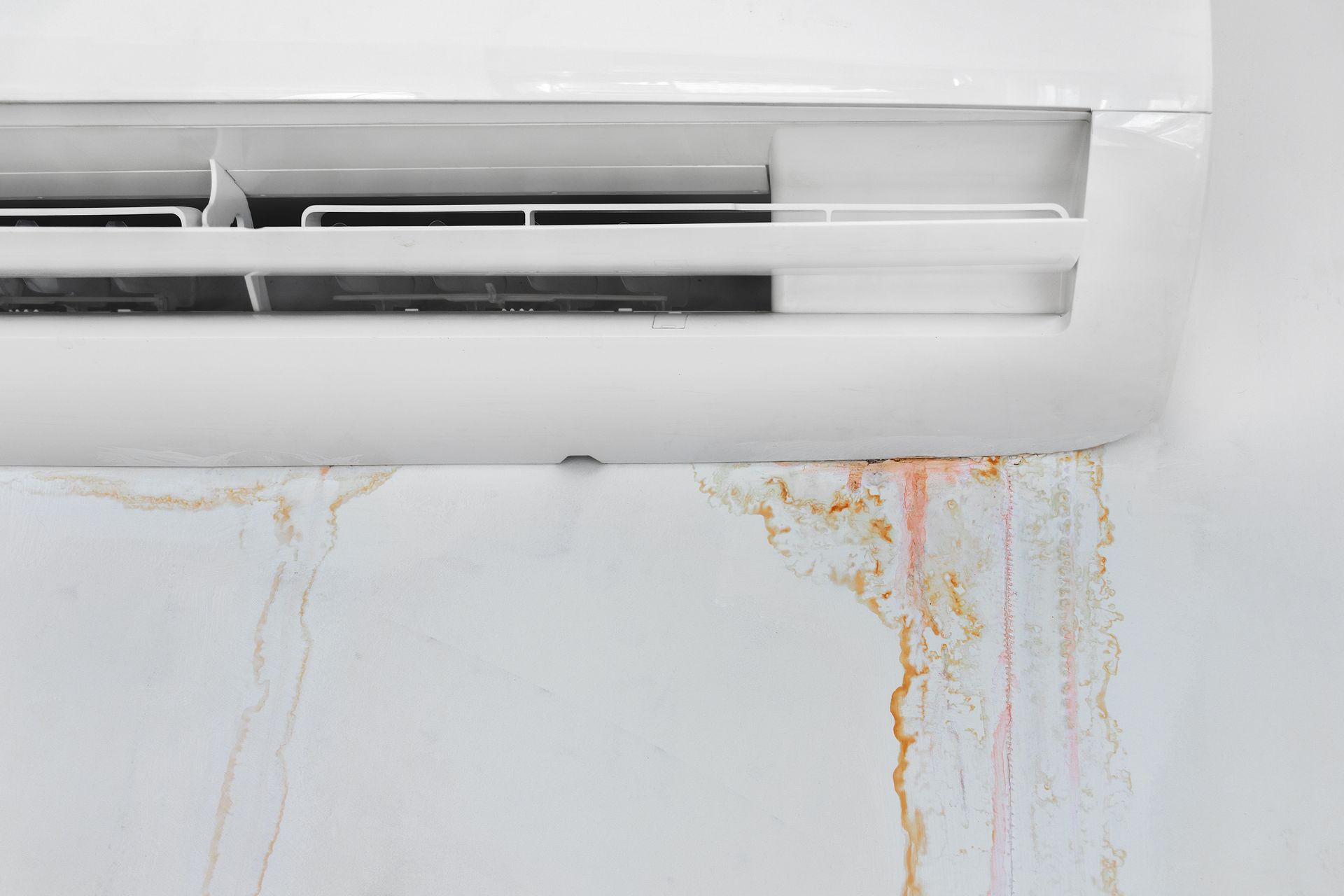
White wall with stained and peeling paint beneath a ceiling air vent unit
August 28, 2026
Why is your air conditioner leaking water? A Boca Raton HVAC team details 8 likely causes, what to do right now, and how to prevent leaks in humid Florida.
Hand turning a wall thermostat showing 68°F and 20.5°C
August 28, 2026
What is the best AC temperature for a South Florida summer? A Boca Raton HVAC team on the ideal setting, humidity, and how to stay cool without high bills.
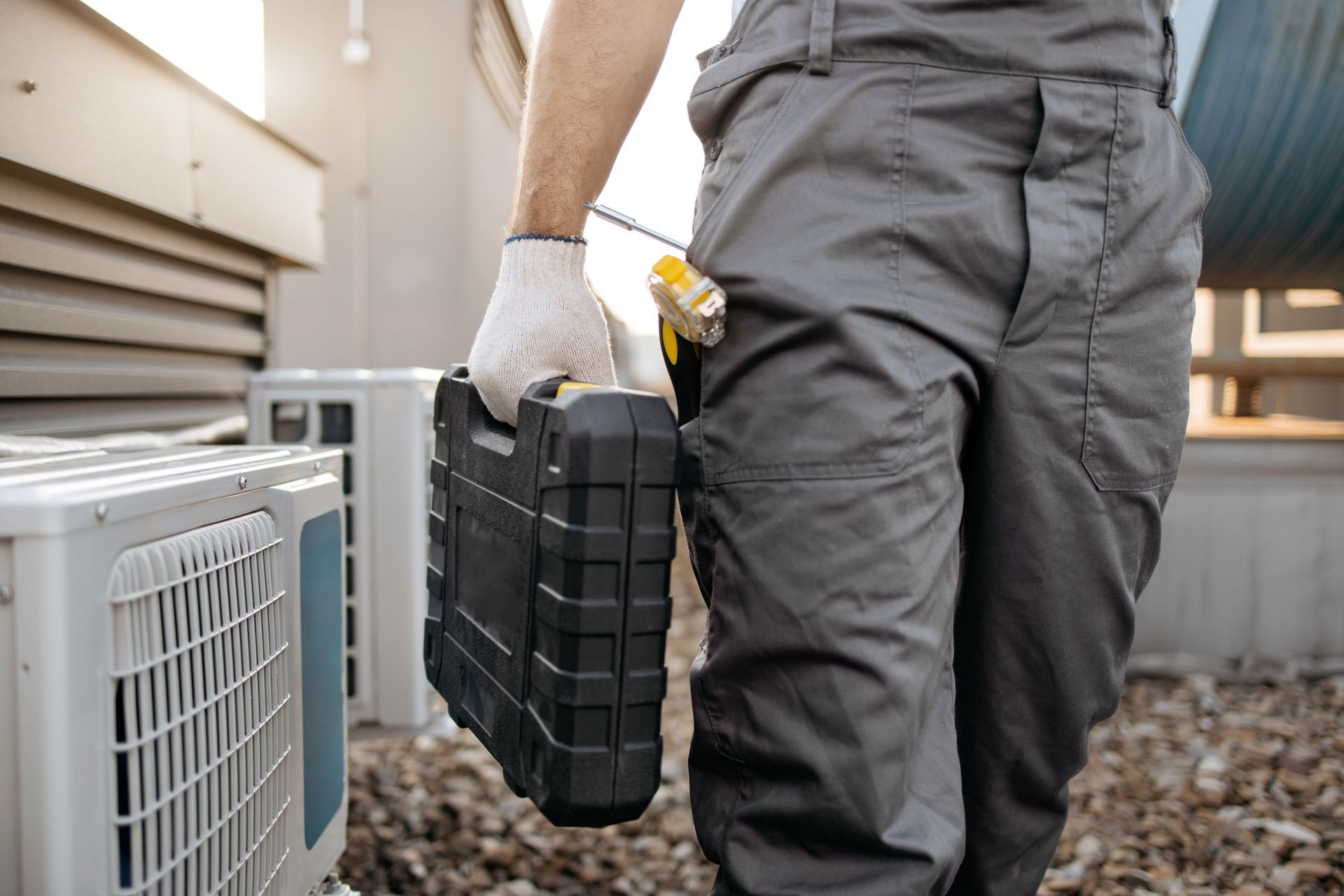
Technician carrying a black toolbox beside outdoor HVAC units on gravel.
July 25, 2026
A clogged AC drain line causes leaks, musty smells, and shutdowns. Learn the warning signs, causes, and safe next steps to clear it in humid South Florida.
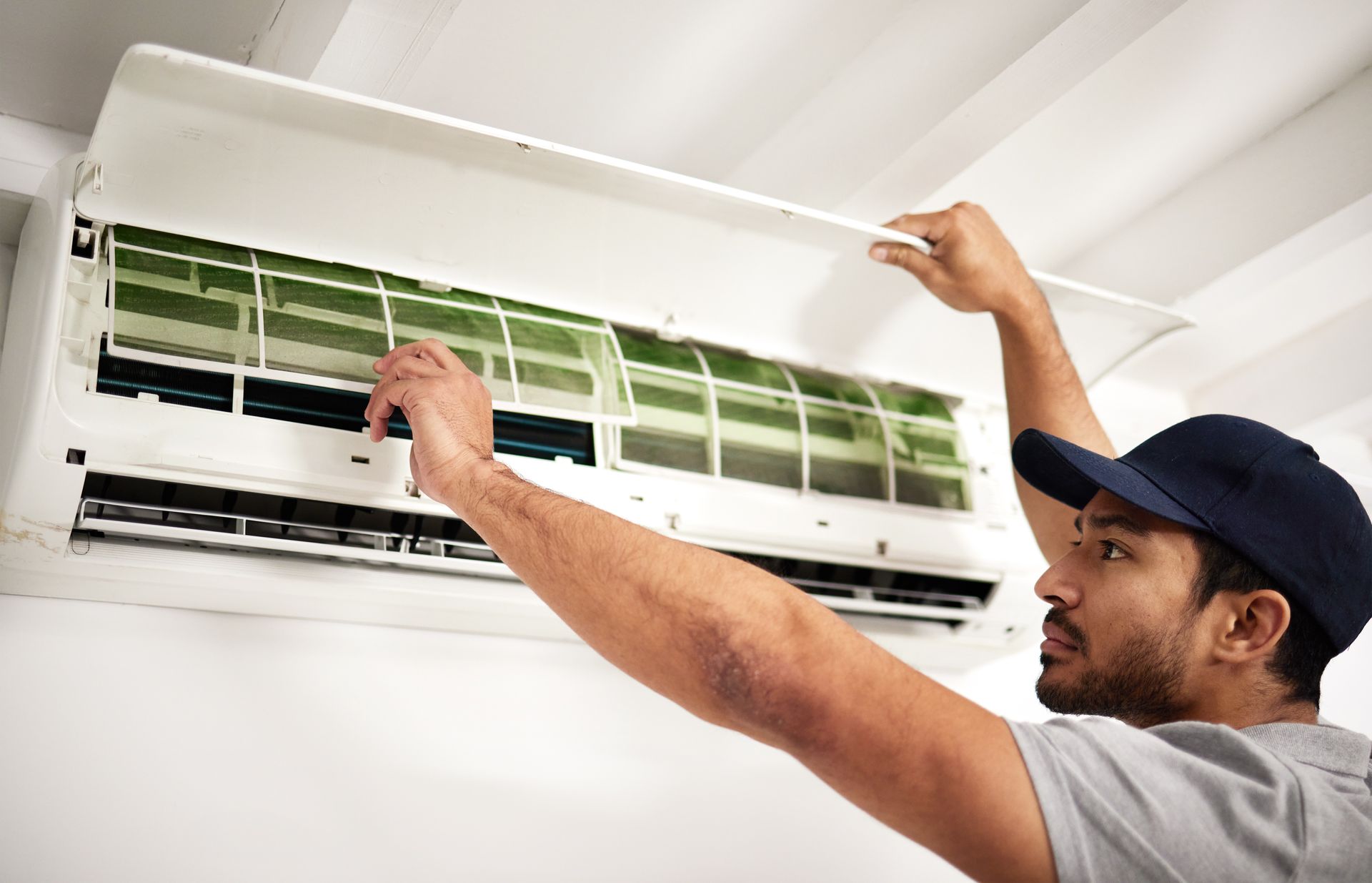
Technician cleaning a wall-mounted air conditioner filter indoors
July 25, 2026
Is your AC running but not cooling? The 9 most common causes, from dirty filters to low refrigerant, plus what to do about each in the hot Florida climate.

Woman using a laptop while seated in a gray armchair, with a large blue circular background.
April 24, 2025
Trying to service or understand your HVAC system on your own can be hard, which is why the experts at Florida Cool receive a lot of questions.

Woman smiling at a wall-mounted smart thermostat while holding a smartphone in a bright room
April 24, 2025
Smart thermostats are a revolutionary addition to modern homes, offering enhanced control and energy efficiency for heating and cooling systems. Unlike traditional thermostats, these devices connect to the internet, allowing users to remotely manage their HVAC systems through smartphones, tablets, or computers.
