


Clogged AC Drain Line: Warning Signs, Causes, and Safe Next Steps
July 25, 2026
or give us a call at
A clogged AC drain line usually shows up as water pooling near your indoor unit, a musty smell, higher indoor humidity, or the system shutting itself off. It happens when algae, mold, dust, and debris build up inside the condensate line and block the flow of water. You can often clear a minor clog yourself with a wet/dry vacuum and a vinegar flush, but a line that keeps clogging or a system that has shut off needs professional attention. In humid Florida, this is one of the most common AC problems there is.
At Florida Cool, we service air conditioning systems across South Florida, where year-round humidity makes condensate drain problems especially common. We clear and repair drain lines constantly, so the signs, causes, and steps below reflect what actually works to keep the line flowing in our climate.
Start with the warning signs, then see what causes clogs and how to handle them safely.
In This Guide
- Warning signs of a clogged drain line: How to know the line is blocked.
- The warning signs at a glance: Sign, meaning, and urgency.
- What the drain line does: Why it matters at all.
- What causes a clogged drain line: The usual culprits.
- Safe next steps to clear it: What you can do yourself.
- When to call a professional: Knowing your limits.
- How to prevent future clogs: Keeping the line clear.
- Frequently asked questions: Quick answers to common questions.
Warning Signs of a Clogged Drain Line
A clogged condensate line gives clear warning signs if you know what to look for. Catching them early prevents water damage and a shut-down system, and most are easy to spot once you know where to look.
The Common Symptoms
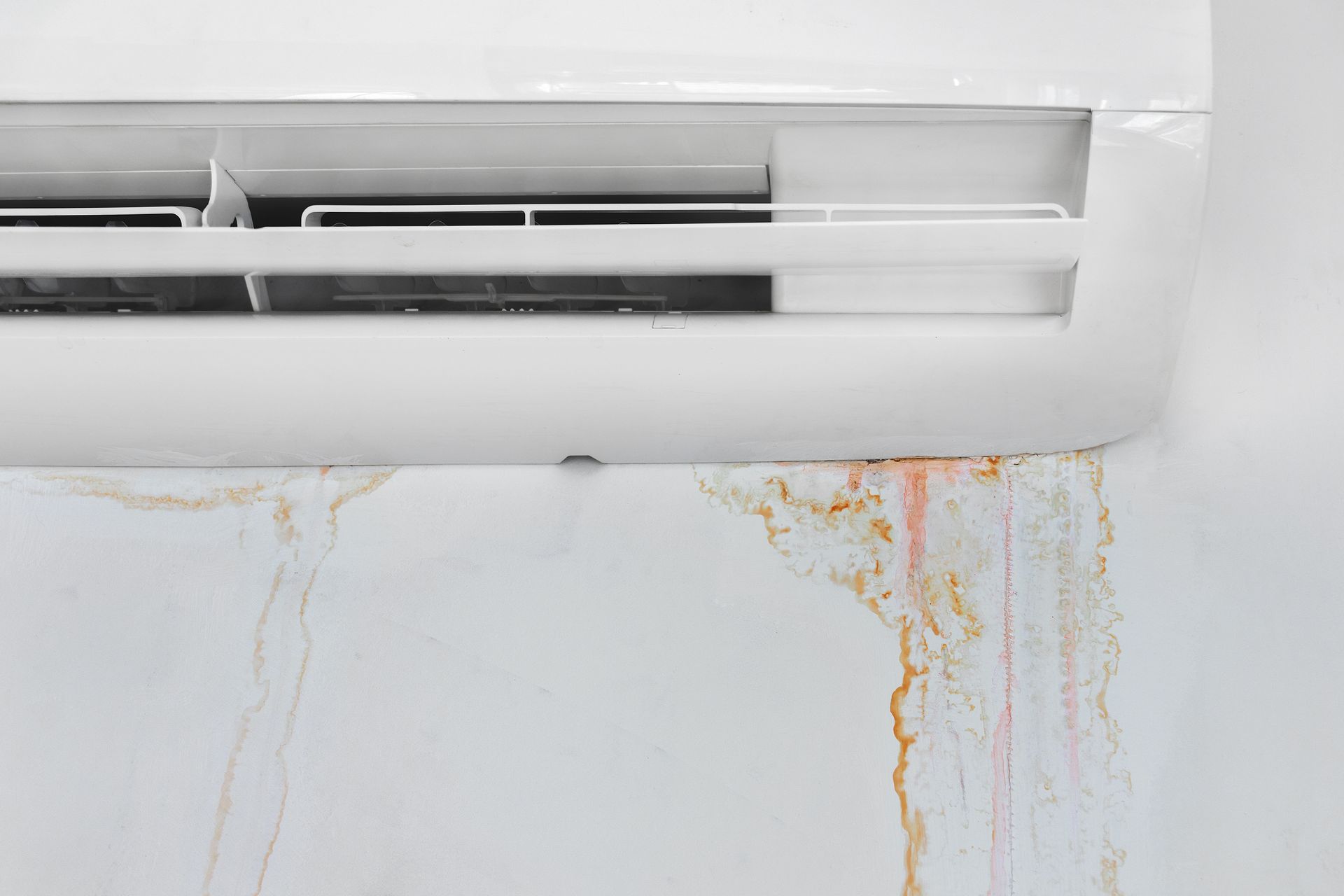
- Water pooling around or under the indoor air handler.
- A musty or moldy smell coming from the vents or the unit.
- Higher indoor humidity that the AC cannot seem to shake.
- The system shutting off on its own, if it has a float safety switch.
- A full drain pan that will not empty.
Any one of these is worth investigating. Several together strongly point to a blocked condensate line that needs to be cleared.
Why the Signs Appear
When the line clogs, the water your AC pulls out of the air has nowhere to go. It backs up into the drain pan, then overflows or triggers a shutoff.
That standing water is also what causes the musty smell and can let humidity climb, since the system cannot drain the moisture it removes. The signs all trace back to the same root problem: water that cannot escape.
The Warning Signs at a Glance
This table connects each sign to what is happening and how urgently to act.
| Warning Sign | What It Means | Urgency |
|---|---|---|
| Water pooling near the unit | Line is backing up | Act soon |
| Musty or moldy smell | Growth in the line or pan | Act soon |
| Rising indoor humidity | System cannot drain moisture | Moderate |
| System shut off on its own | Float switch tripped | Act now |
| Full drain pan | Water cannot flow out | Act now |
The signs at the top may give you a little time, but a system that has shut off or a pan that is overflowing needs prompt attention to avoid water damage.
What the Drain Line Does
To understand the clog, it helps to know what the drain line is for. It plays a bigger role than most homeowners realize, especially in Florida.
Removing Condensation
As your AC cools your home, it pulls large amounts of moisture out of the air. That moisture condenses on the evaporator coil, drips into a drain pan, and flows out through the condensate drain line.
In humid Florida, an AC can remove gallons of water from the air every day. The drain line is what carries all of that water safely outside, away from your home and equipment.
Most systems drain by simple gravity through a sloped PVC line, sometimes with a condensate pump if the unit sits below the drain point. Either way, the line depends on staying clear, since even a partial blockage backs water up into the pan almost immediately given how much flows through.
Why Clogs Are So Common Here
Because so much water flows through the line, and because our warm, humid conditions are ideal for algae and mold, Florida drain lines clog more often than in drier climates. The same dampness that keeps the line busy also feeds the growth that blocks it.
This is why drain line maintenance is a routine part of AC care in our area. It is less a rare failure than an expected part of owning an AC in a humid climate.
It also means the problem is not a reflection of a bad system or poor upkeep on its own. Even well-maintained units in Florida need their drain lines cleared periodically, simply because of how much moisture moves through them in our climate.
What Causes a Clogged Drain Line
Clogs do not appear out of nowhere. A few specific culprits are behind nearly every blocked condensate line.
Algae, Mold, and Biological Growth
The most common cause is biological growth. The dark, damp inside of a condensate line is a perfect environment for algae and mold, which build up into a slimy blockage over time.
This is especially true in Florida's humidity and heat, where growth is fast and constant. It is the number one reason lines clog here, and the reason regular flushing helps so much.
The growth starts as a thin film and gradually thickens into a slimy mass that narrows and then blocks the line. Because it builds slowly, many homeowners do not notice until water is already backing up, which is why periodic flushing to stay ahead of it is far easier than dealing with a full clog.
Dust, Dirt, and Debris
The other main cause is physical debris. Dust and dirt pulled in through the system settle in the line and mix with moisture and growth to form a clog.
- Dust and dirt from the air blowing across the coil.
- Debris that enters the line or pan over time.
- Rust or sediment in older systems.
Together with biological growth, this debris gradually narrows the line until water can no longer pass.
A dirty air filter makes this worse, since more dust gets pulled across the coil and into the condensate stream. That is one reason regular filter changes help protect the drain line as well as the rest of the system, tying these common AC problems together.
Safe Next Steps to Clear It
If you suspect a minor clog, there are a few safe steps you can try before calling for service. Stop if anything seems beyond a simple fix, since forcing it can make things worse.
The DIY Approach
Start by turning off your AC at the thermostat and the breaker to prevent water damage while you work. Then locate the drain line, usually a PVC pipe near the outdoor unit or the indoor air handler.
- Clear standing water from the drain pan with a wet/dry vacuum or towels.
- Attach a wet/dry vacuum to the outdoor end of the line to pull out the clog.
- Flush the line with a cup of distilled vinegar to break down growth.
Running vinegar or a similar approved solution through the line every so often helps keep it clear between cleanings.
Give the vinegar some time to work before flushing with water and turning the system back on. If water flows freely afterward and the drain pan stays empty, the clog is likely cleared. Keep an eye on it over the next few days to be sure the problem does not return, which would signal a deeper blockage.
What to Avoid
Do not use bleach in large amounts or harsh chemicals that can damage the line or pan over time. Distilled vinegar is gentler and effective for routine clearing.
Also avoid taking apart the system or forcing anything into the line, which can cause damage. If a vacuum and a vinegar flush do not restore the flow, it is time to call a professional rather than escalate.
Snaking the line with a wire or pushing a garden hose through it at full pressure can crack fittings or dislodge connections, turning a simple clog into a repair. When in doubt, gentler is better, and a stubborn clog is a signal to hand it off rather than force it.
When to Call a Professional
Some drain line problems go beyond a DIY flush. Knowing when to call keeps a minor issue from turning into water damage or a bigger repair.
Signs You Need a Pro
If your system has shut itself off, if water keeps backing up after you clear it, or if the line clogs repeatedly, it is time for professional service. These point to a stubborn or recurring blockage that needs proper equipment.
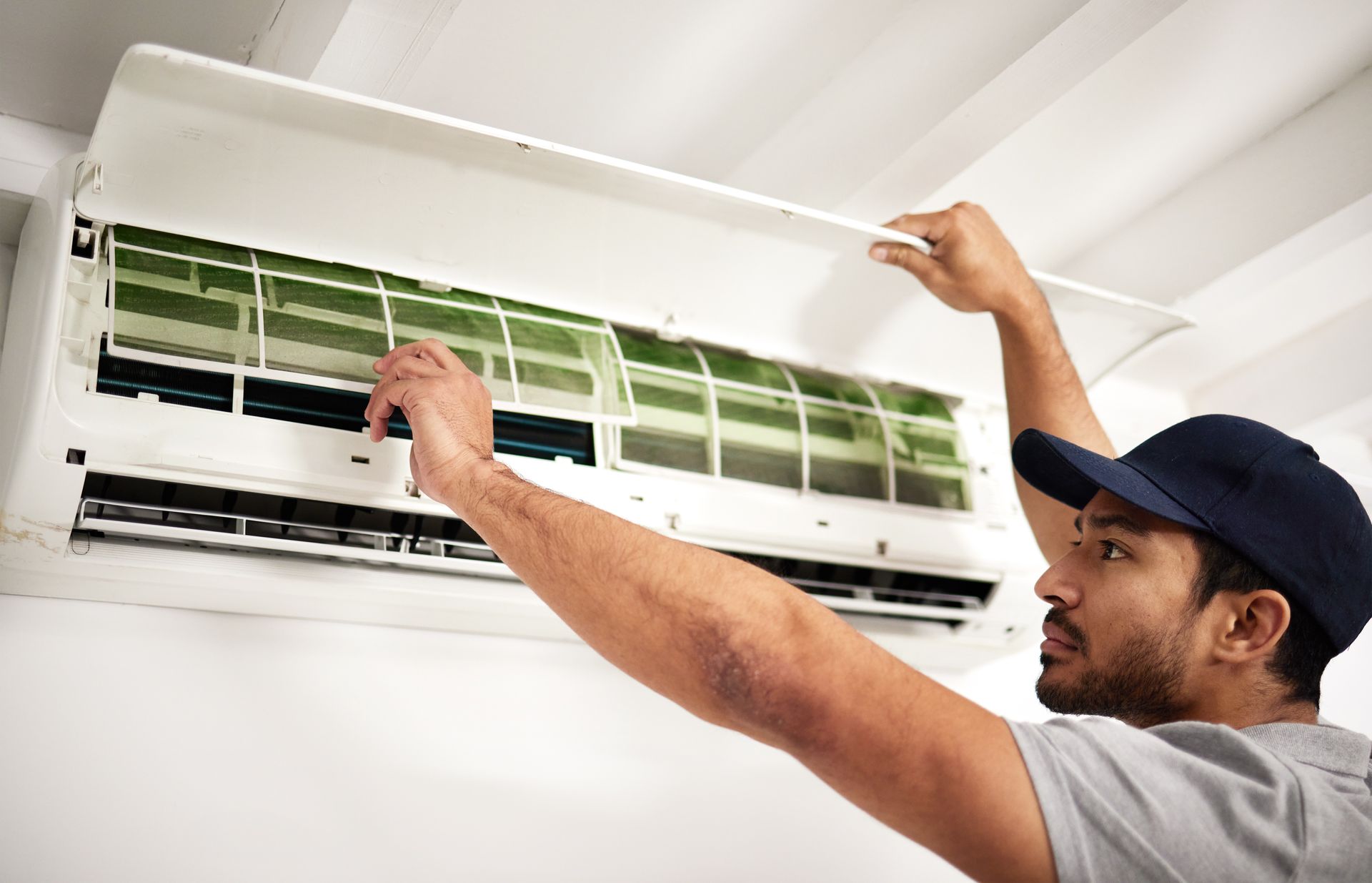
A technician can clear the line fully, check the drain pan and float switch, and make sure nothing else is contributing. If the AC shut off and will not restart, that ties into the same safety systems we cover in our guide on an AC running but not cooling.
A recurring clog in particular is a signal worth heeding. If you find yourself clearing the line every few weeks, something upstream, like heavy biological growth, a poorly sloped line, or a failing pump, is likely the real issue, and a professional can address the cause rather than just the symptom.
The Value of Professional Clearing
A professional clears the line with the right tools and confirms the whole condensate system is working, not just the visible part. That thoroughness is what prevents a repeat clog a week later.
Our AC repair team handles drain line clogs regularly and can get your system draining and cooling again. It is a common, straightforward fix when handled correctly.
A pro can also treat the line to slow future growth and confirm the drain pan, float switch, and slope are all doing their job. That whole-system check is the difference between clearing today's clog and preventing the next one.
How to Prevent Future Clogs
Because clogs are so common in Florida, prevention is worth the small effort. A few habits keep the line flowing and the water where it belongs, and none of them take much time.
Simple Prevention Steps
- Flush the line periodically with distilled vinegar to slow growth.
- Change your air filter regularly to reduce dust reaching the line.
- Keep the area around the unit clean and free of debris.
- Watch for early signs like a faint musty smell or slow drainage.
Make It Part of Regular Maintenance
The most reliable prevention is professional maintenance that includes clearing and treating the drain line. During a tune-up, a technician flushes the line and checks the pan and safety switch before problems start.
Because our climate makes clogs so likely, this is one of the most valuable parts of routine AC care here. Our maintenance and tune-up service and maintenance plans are designed to keep the drain line and the rest of the system running through the Florida heat.
Bundling drain line care into regular maintenance also means it happens on a schedule rather than only after a problem appears. That shift from reacting to preventing is what keeps the small, common issues from turning into water damage or a system shutdown during the hottest part of the year.
Keeping Your AC Draining Properly
A clogged AC drain line is one of the most common issues in humid Florida, but it is also one of the most manageable. Watch for pooling water, musty smells, and shutdowns, try a safe vacuum-and-vinegar clearing for minor clogs, and call a professional when the line keeps backing up or the system shuts off.
At Florida Cool, we clear and maintain condensate drain lines across South Florida, and help homeowners keep them from clogging in the first place. When you need help,
reach out to our team or schedule
AC repair. We will get the water flowing and your system back to cooling.
Got Questions?
Frequently Asked Questions
How do I know if my AC drain line is clogged?
The clearest signs are water pooling around the indoor unit, a musty smell from the vents, rising indoor humidity, a full drain pan, or the system shutting itself off. Any of these, especially together, points to a blocked condensate line.
Can I unclog my AC drain line myself?
Often yes, for a minor clog. Turn off the system, clear the drain pan, use a wet/dry vacuum on the outdoor end of the line to pull out the blockage, and flush with distilled vinegar. If it keeps clogging or the AC shut off, call a professional.
Why does my AC drain line keep clogging in Florida?
Our warm, humid climate is ideal for the algae and mold that cause most clogs, and the AC removes so much moisture that a lot of water flows through the line. That combination makes recurring clogs common, which is why regular flushing and maintenance help.
Is a clogged AC drain line an emergency?
It can become one if ignored, since backed-up water can cause damage or shut the system down. It is not usually dangerous, but it should be addressed promptly to avoid water damage to your home and equipment.
Can I use bleach to clean my AC drain line?
Distilled vinegar is the safer choice for routine clearing, since large amounts of bleach or harsh chemicals can damage the line and pan over time. A gentle vinegar flush is effective at breaking down the growth that causes most clogs.
Recent Posts